Monday, February 23, 2009

Lions, Tigers and Teddy Bears … Oh My! Toy Fair ‘09

www.resultsdriven.info

After attending the 106th annual American International Toy Fair in New York City this past weekend, we at Accelerator Advertising are excited to see how well the toy industry is going to do this year. We were there to develop new strategies for packaging, designing children toys, and marketing the latest trends of going green and lead-free.

We explored every inch of the Jacob K. Javit Center and when talking with toy marketers they gave a general mood of optimism, given the current condition of the economy. They were also excited about the upcoming holiday season. The upbeat tone was obvious on the show floor as buyers and sellers were once again working deals for the forthcoming year. Several people said that in their first day they placed more orders than in the entire week of toy fair last year!

The newest and hottest trends were prevalent all over the fair with “green” materials used in the production and packaging of many newly launched products. We say products such as eco-friendly plush animals and biodegradable bags.

Another hot trend was being organically certified, which featured many more products than expected. Child safety is always a concern, and with the indecencies of lead poisoning in the past few years lead-free seems to be a number one selling point for retailers.

Another American International Toy Fair has come and gone and we can truly say that after what seemed like miles and miles of toy we’re sad it’s over and can’t wait for next year! Also, we’re eager for the upcoming year in the toy industry. It should be one for the record books!

Author: Mr. Timo Matero, CEO and Director, Accelerator Advertising, Inc.

Thursday, February 5, 2009

Super Bowl Commericals


www.resultsdriven.info


The Super Bowl is always the time North America looks forward to great football, food, drink, friends, and for me... great advertising. This year, once again, offered lots of great creative and memorable ads. The Doritos spot in particular was interesting because it was not only funny and memorable, it also placed the product in a starring role which many commercials fail to do in an effort to entertain rather than sell.

The most interesting aspect of this particular commercial was the fact that it was the result of a contest that Frito-Lay established months ago to let ordinary consumers write and produce their own Super Bowl commercial. The winner being the one shown here.

The Doritos' campaign not only generated lots of publicity but also helped build a relationship with its consumers. The successful campaign attracted 2 million clicks on the contest microsite and also attracted 750,000 unique users, and 2 million total video views. The contest ultimately racked up one BILLION impressions, equal to $36 million in paid media. Now that's impressive viral marketing.

The final winners, brothers from Indiana, Dave and Joe Herbert not only had their winning idea produced into a commercial viewed by 94.5 million but also walked away with $1 million dollars! (Not to mention the millions of hits the ad received during the week after the Super Bowl.) Frito-Lay won by having tons of free publicity, free ad ideas, and a free commercial that the Herbert's produced themselves for less than $2000. The cast and crew worked for food only. I hope the brothers share some of their winnings with them!

Fun and effective, memorable and timeless, it demonstrates that sometimes the best way to market is to go directly to your demographic and see what resonates with them.

The day after the Super Bowl, Doritos was number one on USA Today's Ad meter for all the Super Bowl ads.

Author: Marc Obregon, President, Accelerator Advertising, Inc.


Source:

http://www.google.com/hostednews/ap/article/ALeqM5gYSk_7YU_6WuoeX66v72DMnruzMwD964DN303

http://www.usatoday.com/money/advertising/admeter/2009admeter.htm


www.resultsdriven.info

The Snuggie: Successful Marketing 101

www.resultsdriven.info
Snuggie

Snuggie

Wake up marketers! It’s a world where the inmates run the asylum and you’d better learn how they do it! For decades now, marketers and brands have enjoyed the power to craft their messages and dictate how consumers should view their products. One need only to do a quick Google search for, “The Snuggie” to see how consumer driven content can benefit or damage your marketing efforts.

The Snuggie has been embraced, and become a part of popular culture with YouTube videos, blogs, and viral content all driven by popular demand. It’s this wave of new media frenzy that can either catch a brand (or product) and propel it to lofty sales record heights or bring it down to be dashed on the rocks unmercifully. As marketers, we need to watch, listen and learn from the successes and failures of trying to influence the new media marketplace. That is, learn the best ways to embrace it, as did Mentos, or when to reject it, such as Sony’s SCEA fiasco.

There are plenty of great resources out there to get you up to speed. But if you ask me, you’ll be better off sitting on your couch, (wrapped in a Snuggie) as you browse the popular social mediums and learn by observation before you head forth into this vast new world.

Author: Mr. Timo Matero, CEO and Director, Accelerator Advertising, Inc.

Prepare Your Advertising for the Great Recession of ‘09

www.resultsdriven.info

In this down economy advertisers are going to have change their messaging. And the more quickly they do, the better off their numbers will become.

Here are a few common sense guidelines for marketing in a recession:

1. Stress the VALUE PROPOSITION of your products or services, rather than features and benefits. Think about how your brand will make a significant difference to your audience in terms they will value and understand. Consider the success of Walmart’s Save Money. Live Better campaign. Talk about throwing a value proposition out there for everyone to see and grab hold of, huh?

2. Make price messaging secondary to longevity, savings achieved over the lifetime of ownership, hand-me-down-ability, and real-user and professional product / satisfaction reviews. When pennies get pinched, shoppers look for those products and services that will give them extended value for money, not the quick fix. If your product lasts longer, say so. If it cuts other expenses, tout it. Think of all the great messaging that helps a person rationalize purchasing a product that is employed by successful infomercials. Could your brand promotion use a little more Shamwow?

3. Emphasize how your offerings will help them “get back to basics” of thrift and frugality. In the age of consumerism everyone wanted to “keep up with the Jones’”, now everyone will want to “out-frugal” one another. Making less do more is fast becoming trendy. Consumption of oil and gas has continued to decrease even as prices are falling through the floor. The retail sector has seen a dismal drop since October ‘08. People are spending less and using credit less. Meals at home are more frequent and the list goes on and on. Being frugal is now a virtue and being cheap is noble. Your messaging should mirror those values.

4. When belts tighten, advertising and promotional messaging becomes more scrutinized and offers and discounts get shopped. Be sure to make your advertising simple, creative and most of all honest. Savvy shoppers will now sift through all the mediums and take plenty of time researching their options prior to making a large purchasing decision. Be sure your messaging is believable and of honest value if you expect to attract shoppers this upcoming year.

Here’s to a great new year! Yes, it will be challenging for marketers and agencies, but the opportunities to build brands and champion categories like never before!

www.resultsdriven.info

Who Started Making the Holidays So Commercial Anyway?

www.resultsdriven.info
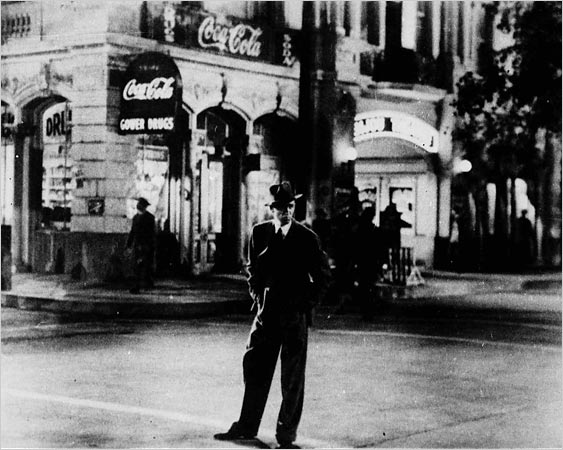
It's A Wonderful Life

It's A Wonderful Life

Working in the advertising business, I get plenty of jeers from my friends and family around the holidays for my role in the commercialization of the holidays. I must admit, that even I at times wish the holidays weren’t so crass and commercial. That was until I watched the holiday classic, “It’s a Wonderful Life” with Jimmy Stewart.

No. It wasn’t Clarence. Or the sweet Mrs. Bailey and her love for her husband. Or even ZuZu and her precious little smile that changed my mind.

It was a beautiful act of good old-fashioned brand logo placement that changed my downcast world view that modern agencies and their brands are to blame for the commercialization of the holidays.

The scene happens during the part when Jimmy Stewart’s character is running through the main street of Pottersville. On either side drinking and dancing establishments flash their attractions and burlesque shows offer a peek at a titillating sight. On the left hand side of the street, just up a bit, you will notice a huge, lit Coca-Cola sign on which the camera stays just a bit too long. The sign actually competes for frame a bit with the hero!

Now, I don’t have any proof that agencies and brands were deliberately placing product logos in front of susceptible viewers eyes back then, but I would wager it wasn’t placed there on accident. (I also have an inkling that Macy’s department store may have had to grease a few palms to score it’s starring role in “Miracle on 34th Street”, but can’t prove that either.) You can call me cynical all you like, but at least I wasn’t the one to start capitalizing on the holiday cheer to promote a brand or make a quick buck.

Now I’m not saying that advertising during the holidays is bad or makes you into a mean old Mr. Potter if you do choose to grab some sales amidst the holiday cheer. Just let’s agree here and now to keep it genuine and classy and not succumb to all this commercialization.

So what’s my advice to rise above the commercialization of the holidays? Stay away from an overabundance of jolly ol’ Saint Nicks, snowflakes, Christmas trees and red ribbons. Rise above these tired clichés and your ads will soar high above the din and clang of the grubby merchant stalls and mountains of free standing inserts like a bright, shining star over a tiny village with a manger.

On behalf of everyone here at the Accelerator Companies,

Merry Holichriskwanhannukamas everyone!

www.resultsdriven.info

It’s 10 p.m. on Saturday night. Do you know where your shopper is?

www.resultsdriven.info

You have no excuse not to with today’s dramatically informative market research methods, which encompass everything from old school surveys to secret-agent-caliber equipment. The market is changing, and market research methods are changing right along with it. They are evolving into increasingly shopper-focused, in-store-oriented techniques… because at-retail is the new mass medium.

Let’s take a look at the cutting edge.

1.) In-store ethnography. Given the importance of in-store marketing, market research to test its effectiveness should happen in the store. Surveys might prove helpful, but in-store observation bypasses the dishonesty and bias that might taint the effectiveness of surveys. Plus, why ask shoppers how they shop when you can literally watch them do it, and possibly ask them to take your survey when everything is still fresh in their minds. Odds are good that if you ask a consumer in the salty snacks aisle their snack packaging preferences they will provide you with a LOT more information than a consumer sitting in a conference room trying to remember. This type of research is critical for those who work on point-of-purchase displays.

The term “ethnography” refers to anthropological research centered on gathering scientific descriptions of cultures. In the context of market research, it refers to researchers who observe consumers in their “natural habitats” and compile detailed descriptions of what they are doing. If the ethnographer is only there to observe, he or she will visually record, take notes, or record a quiet spoken description of behavior, like Animal Planet hosts focused on humans interacting with brands. If the ethnographer is there to observe and then survey, he or she will approach the consumer once they’ve finished their business in the aisle and ask them a series of detailed questions, piecing together a combination of demographic data, quantitative rankings, and qualitative descriptions of the respondents’ thoughts and feelings. Ethnography is complex, but if done properly it is immensely rewarding.

It is also more powerful than ever thanks to brilliant advances in technology; consider the secret chest-mounted cameras used by Actionspeak and the hand-held computers used by SmartRevenue ethnographers to administer discreet, “create-your-own-adventure” interviews.

2.) Virtual retailing. If you are considering an innovative new store layout, point-of-purchase display, or other potentially costly element, you can now watch consumers interact with it before investing money in installing it in stores. Cutting-edge researchers are now creating smart environments that simulate an actual environment while invisibly gathering valuable data on consumer behavior within it.

Fifty percent of all purchasing decisions are made in the store – do you have the intelligence you need to influence that statistic in your favor?

It’s 10 p.m. on a Saturday night. And somewhere, someone else is watching and learning from your consumer.

Don’t be left out. Necessity breeds invention, and in these difficult economic times market research has been anything but dormant. Now is the time to take advantage of these trends and invest in your brand in a serious, laser-targeted way.

www.resultsdriven.info

What Happened in Vegas… Should Happen to You

www.resultsdriven.info

You’d certainly expect to see some exciting sights in America’s playground, and the At-Retail Team here at Accelerator did just that in Las Vegas this past week. We couldn’t have been more enthralled by what we encountered at the 2008 In-store Marketing Expo: groundbreaking research, true innovation, and the chance to spend some quality time at the feet of the store honchos from Walmart and Kroger.

Over the next few weeks we’ll be paying out the jackpots of information we’ve won for our clients. We’ll share insights on merchandising trends, innovative materials, and substantive research that is changing the ways marketers develop products and the ways retailers will sell them.

But for now consider the following facts:

- This year Fox’s highest-rated television show, the American Idol Finale, received one of the highest ratings on television with 35 million viewers.

- This may seem like a significant number, but to put it into perspective 150 million people shop at Walmart each week. What’s more, 86% of the entire U.S. population shops regularly at Walmart, according to Walmart’s figures.

The point: The marketing climate is changing. Brand marketers must realize that “at-retail” is now a mass medium unto itself!

Why do so many brand marketers continue to waste their money on dinosaur mediums? In light of the above facts, only they can answer that.

Moving forward, each brand is going to have to “up its game” and treat at-retail as a mass medium. Brand marketers who want to win the aisle wars will have to increase in-store spending, research, engage in shopper-focused marketing, and provide category leadership to set themselves apart. It’s going to get very vicious out there, but the brands that take action now will have the advantage of defining the game.

As more of our findings become ready to release, we’ll be sharing them with you. Until then, keep an eye out for all the new technology, video, and sound that will be hitting the shelves shortly!

But more about that later.

To see more about how Accelerator helps brands and retailers work together in a collaborative way, click here.