Thursday, January 29, 2009

Finding and Launching THE IDEA

www.resultsdriven.info

If you’re a marketer there’s possibly one time and one time only in your entire career when THE IDEA will come into your life. You know – THE IDEA that will put game-changing points on the board, move the needle, and make your career.

You know the kind of idea I’m talking about – the kind of fresh, share-stealing, eye-popping idea that makes everyone in your department, division, company and industry stand slack-jawed in AWE and enviously murmur in their minds, “I wish I would have thought of THAT.”

I am talking about the kind of idea that puts YOU on the map, lets you write your own ticket, and helps you make your career. Success as you’ve known it to be will pale in comparison to the success you know when THE IDEA is put into action on your brand. This IDEA is so big it will require its own special budget, which they will give you… willingly.

If you’ve experienced THE IDEA, you know to what I’m referring. If you haven’t, then you’re probably sitting in your chair wondering how to go about getting your very own IDEA.

Here’s how.

1. Be prepared. Know your market. Know your brand. Read all you can about the market you’re operating in. Follow trade journals, read press releases, go to conventions, know your market inside out. Then study the impact your brand has on that market.

2. Become your target. Shop where she shops. Dine where she dines. Read what she reads. Watch the programs she watches. Soon enough you will see opportunities to connect with her in ways you’ve never thought possible, and ways to improve your product for her no one else has imagined.

3. Be open to new ideas. If your agency strategist recommends an unproven path, consider it. If a cabbie tells you he thinks he has an idea for a better widget, listen to him. Great ideas come from everywhere if you’re willing to listen. Remember, you’re only an expert in your market – not in everything.

4. Be ready to capture all of your thoughts on a notepad, PDA, voice recorder, napkin, whatever. Often THE IDEA won’t appear all once, but in small parts and pieces.

Congratulations! THE IDEA is on its way!

OK, so what happens now? When THE IDEA comes, don’t tell anyone right away! Of course you’re excited. It’s THE IDEA, after all. You’re pumped. You’re jazzed. But now is not the time to disclose THE IDEA. You first must explore it further. Study it. Try to sink it.

Get your facts down, understand the barriers and the rewards of THE IDEA. This is no time for team sharing, committees, or allowing glory-grabbing upperclassmen to steal it away from you. This is the time to keep quiet and document your progress every step of the way.

After that, make THE IDEA presentable. Make it into a formal business case. When you are ready to announce it, THE IDEA should be solid, comprehensive, well thought out… and yours.

Ready to make your mark on the world now? THE IDEA is out there waiting for you – now go get it!

www.resultsdriven.info

Friday, January 16, 2009

About Accelerator’s New Look…

www.resultsdriven.info

You may have noticed that Accelerator has a fresh new look! But before we can tell you why, we have to tell you how we’ve gotten where we are today.

It’s been over six years since the Accelerator Companies launched out amidst the devolution of the traditional ad agency models. Where big media once dominated, new channels of reaching people opened. Clients split duties of creative, planning, and media, causing the slow, dinosaur agencies to watch their accounts vanish before their eyes. Suddenly, the new guys on the
block, like Accelerator, were capable of out-running, out-pacing, out-thinking, and most of all, out-creating these advertising giants.

It was scary for us at first. Starting a new agency meant starting from scratch. No clients. No capital. Not even a coffee maker to brew a cup of inspiration. But we knew that by listening, instead of frantically doing, our new agency would become something unique and valued in the marketplace.

To that end, we set up a series of interviews with lead corporate marketing pros to research and to let vent their frustrations — frustrations specifically regarding failures and disappointments that their world-class clients faced when dealing with the traditional agency model.

After hearing their many hair-raising stories and taking note of their sage advice, Accelerator set out to create something that had never existed before: an agency without account executives, layers of V.P.’s, and endless stacks of paperwork. And if you can imagine, an agency without egos (which is why there are no individuals singled out in our marketing materials, websites, or any place else)!

Gone were the account executives that merely took orders. We brought on clever, innovative, and problem-solving PEOPLE who had ideas and who would contribute to making the project successful. These versatile heroes were, and remain to be, recruited from outside the normal channels. By choosing to value life experience, idea generation, and empathy for the client instead of book smarts, Accelerator and its clients benefit from people who are proven to be streetsmart, quick to learn, and incredibly insightful and intuitive.

Our Creative Service teams replaced the old way of one key contact per client. Instead, we integrated creative and account people, who would work together, and would –gasp– meet the client together. This flat, streamlined model proved to be more efficient, allowed the client to address both business and creative concerns in one meeting, and best of all, inspired new thinking. Better yet, it provided the shot of enthusiasm that clients need in the middle of a dreary day.

Traditional office space was replaced with open studios featuring huge, opening bay doors to let the sunshine in. A focus on the work instead of fancy furniture and gleaming atriums allowed, and still allows us, to keep our outlays low, resulting in lower fees for clients (and many repeat projects for us).

Our work patterns were changed as well. This was all thanks to the new, streamlined model and new ways of project management and open communication that were developed to provide fast, accurate turn-around that, in the end, would save clients money. Not to mention our results-driven philosophy that ensures that our projects boost the bottom-line and move the numbers.

These and many other innovative changes have and are proudly making Accelerator the fastest-growing ad agency in the Midwest. And we’re just getting started…

Accelerator is again proving to be a game-changer by focusing on brand and retailer collaboration, consumer engagement and exchange, and partnerships with clients. Our focus is to grow beyond a service provider and to become an integral part of our client’s marketing and business practice. We wish to challenge their thinking and bring them unheard-of solutions thanks to our Pure Idea problem-solving.

So, why the new look? To continue the momentum, and reflect the bright future for our clients and ourselves, Accelerator is rolling out a fresh, new, visual look that is open and airy, free-thinking, and mirrors our open-minded approach. It is a look and mind-set that will continue to effectively produce winning creative, strategy and execution time and again.

When we launched Accelerator, we created the agency of the future. And now, our vision for the next future is bolder than ever. Our new look reflects that. And our new thinking, Pure Ideas, and fresh new approaches all represent our total commitment to our client’s better bottom-line today, tomorrow, and well into the future.

Author: Mr. Timo Matero, CEO and Director, Accelerator Advertising, Inc.

www.resultsdriven.info


Why You Should Advertise MORE in a Downturn Economy.

Legendary ad god David Ogilvy said, “I avoid clients for whom advertising is only a marginal factor in their marketing mix. They have an awkward tendency to raid their advertising appropriations whenever they need cash for other purposes.”

As an agency founder and industry leader, I can attest to the veracity of that statement. As soon as sales slump, forecasts go south, and stock values decline, many of our clients tend to raid the advertising war chest in an effort to spread the wealth around their overall budgets.

While this maneuver may seem to make sense in the CFO’s office, it brings dismay and disaster down the hall in the CMO’s. I can hear it now: the CMO looking at the “spending cut” memo and thinking to himself, “So after two years of raising our profile, generating momentum, and capturing market share, we’re pulling to the wayside and let our competitors who ARE advertising zoom right by. How much will it cost for us to catch up and take the lead…. again? Just brilliant!

Here’s a few compelling reasons why companies should advertise MORE in a downturn economy, not less.

1. Your competitors may be pulling back on ad spending and efforts. This means you will gain an edge in the market without adding the extra dollars it would take in a good economy.

2. Because ad spending by the big companies is down, mediums are forced to drop rates accordingly. Newspaper ad revenues are plummeting; cable and broadcast TV media rates are becoming softer; even digital and mobile ad revenues are being affected. It’s a buyer’s market!

3. Because your ad dollar will go further, now is the time to try allocating funds to newer mediums and testing new platforms.

4. Advertising in a downturn economy bolsters your brand thanks to less noise in the market place.

5. Your brand has an incredible opportunity to relate to, and engage with, your target in a lifestyle affinitive way. Consider Walmart’s Save Money, Live Better campaign that puts their price value at the core of the audience’s aspirations.

To sum it up, the old adage still rings true: “In good times advertise, In bad times, advertise even more.”

PS: And for you cynical types out there, Accelerator is a media neutral agency that receives no commissions for planning or placing media. In fact, we obtain the agency discount and pass that allowance on to our clients. This allows our agency to make non-biased media recommendations and focuses the client’s dollars on getting results, not getting us rich.

Author: Mr. Timo Matero, CEO and Director, Accelerator Advertising, Inc.

www.resultsdriven.info


What Advertising Lacks Today and Why So Many Agencies Miss the Mark

When the founders of Accelerator started out in business, it wasn’t to make a fast buck. They knew that it would take years, maybe even decades of providing a higher level of client service, delivering bankable results, and foregoing fast cash in order to always provide a better bottom line to clients instead of themselves.

Recognition and awards were placed low priority; sacrificing time, energy, talent, and yes, even billings (whether clients recognized it or not) became the working model much to the dismay of Accelerator’s founders, bankers and families.

An example: When agencies across America were gouging gullible clients for designing and programming complex and often times laughably monstrous websites, Accelerator recommended that its clients create appealing, simplistic websites without the bells and whistles, because our research showed that while web visitors were amused by flashy intro pages and animations, the real reason they were visiting the website was for content, not entertainment. Thus, our recommendations to start small, focus on great content, and worry less about the flash were solid. Our recommendations saved our clients money and provided a level of client satisfaction and loyalty that no amount of programming billings could buy. In fact, most of the early websites we designed for our clients eight or nine years ago, still look and feel as if they were done yesterday and still draw many positive visitor comments.

Timo Matero and Marc Obregon believe in the virtues of hard work. They believe that slow and steady wins the race. And that results for the client and community are more important than a corner suite of glimmering high-rise offices.

Here at Accelerator, we believe that today’s advertising players lack a sense of history and no role models to pattern their professional pursuits. There is no anchor for ethics, virtues, or morals for many of the current advertising firms. Leadership is lacking in the boardroom all the way down to the junior who thinks there is nothing wrong with browsing Facebook and texting friends all the day long while client change requests pile up. They miss the importance of the fundamentals, and so miss the mark.

Tsk. Tsk. Tsk. Accelerator thinks our industry can do better. We ask them to follow our lead. Forego media commissions in lieu of planning fees. Look for ways to partner with clients in a revenue sharing option. Scour talent from outside the usual avenues. Do what you say you will, and have it ready when you said you would at the price you estimated. Is it really that hard? Apparently it is. Perhaps that is why so many world brands engage Accelerator to become a creative services partner.

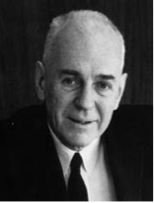
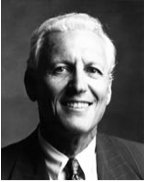
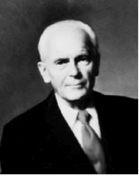
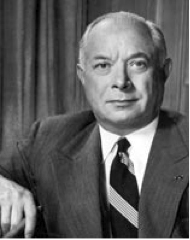
We thought that you might like to know who some of our role models are who inspire everyone of us here at Accelerator Advertising (research thanks to www.advertisinghalloffame.org):

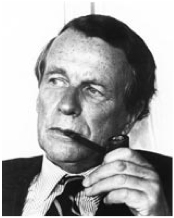
David Ogilvy

David Ogilvy

Arguably advertising’s most successful ad man. His influence on modern marketing been so large that Advertising Age called him “one of the greatest creative minds in the advertising business,” and Time recognized him as “the most sought-after wizard in the advertising business.”
Successful campaigns for Hathaway Shirts, Rolls-Royce, Schweppes and others made Ogilvy an international ad powerhouse. And with such a reputation he had many credits for being first. The first foreign advertising agency to gain access to the Soviet Union, and was the first major agency to implement fee-based compensation.

Ogilvy authored books that became classic texts and must reads for any one involved in advertising. Ogilvy dedicated his talents to the arts as a director of the New York Philharmonic, Chairman at Lincoln Center and as a trustee of Colby College.

Elected to the Copywriters Hall of Fame in 1963, made a Commander of the British Empire by Queen Elizabeth II in 1967, and honored as Officer of the Order of Arts and Letters by the French government in 1991.

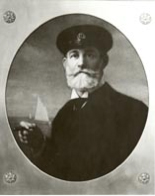
J. Walter Thompson

J. Walter Thompson

Pioneered many of the agency practices and procedures that serve as the foundation of the modern advertising industry. 
Some examples include media billing, testimonial ads, the use of demographics and the behavioral sciences. This scientific approach transformed advertising, marketing, and business on a global scale.

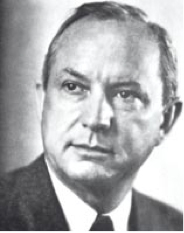
Raymond Rubicam

Raymond Rubicam

Revolutionized advertising by using research to create marketing messages that “mirrored the reader”. Donated much of his company’s time and resources to the WWII efforts in order help win the war at home and abroad.

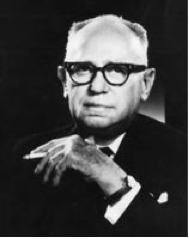
Leo Burnett

Leo Burnett

With a career spanning 56 years, Burnett’s achievements are legendary. He started his own agency in 1935 at the depths of the Depression and saw it grow into the fourth largest agency in the U.S. and the fifth largest in the world. He developed a variety of advertising concepts, including “getting noticed naturally, without screaming and without tricks.”

Burnett received many awards and worked tirelessly on many civic projects. He received honors for accomplishments in wartime advertising in 1945 and for work with the Freedoms Foundation in 1949. He directed the nonpartisan Register and Vote Campaign for the Advertising Council and was given the Special Merit Award by the New York Art Directors Club and was co-recipient of the Annual Gold Medal Award. Despite his monumental contributions to the advertising industry, Burnett still made time for public-service projects that changed people’s lives.

John Caples

John Caples

The famous copywriter and developer of the Caples Formula whose mail-order advertising skills earned him a place in advertising history. Caples developed new methods of testing advertising by using scientific techniques that he outlined in four books he had written. His belief that simple words can be powerful words, an emphasis on the importance of headlines and a focus on directness also characterized his approach toward copy that was intended to sell and get results.

Jay Chiat

Jay Chiat

Co-Founder Chiat/Day - Chiat introduced account planning to the United States and believed that the working environment had a substantial impact not only on the creative process but also on overall agency management. His belief in “architectural management” led him to create the first “virtual office” where award winning creative campaigns for Apple, Energizer, and Reebok were conceived.

Chiat also became a leader in community welfare, the environment and the arts. He was one of the founders of the Advertising Industry Emergency Fund and donated more than $300,000 to fund training and internship programs such as the Los Angeles-based Minority Advertising Training Program to encourage minority opportunities in advertising. Chiat also supported the agency’s pro bono work for clients such as Art Against AIDS, the Pediatric AIDS Foundation, Heal the Bay, the Homeless Coalition and the Blind Children’s Center.

Raymond Mithun

Raymond Mithun

Co-founded Campell-Mithun at the age of 23 and provided the far reaching vision and setting of benchmarks for almost every advertising agency thereafter. Mithun’s personal credo is among the reasons for the growth of both the agency he co-founded and the ad industry as a whole. “You’re put here to do a job and the job’s the boss,” he said. “We’re here to help other people be productive and to leave the world a better place than when we came in.” Mithun founded numerous schools and scholarships for the betterment of the arts and the world.

David Sarnoff

David Sarnoff

Almost single-handedly created the modern radio and television media outlets. Instrumental in the creation of RCA, NBC, and many other outlets. Recognized by Time Magazine as one of the 20th century’s most influential people. Served America in the theaters of WWII by creating and implementing electronic news coverage for D-Day and the liberation of Paris.

But what about Timo Matero and Marc Obregon?
Well their careers are just about half way through by now. Will they be listed among these great leaders? Only time will tell.

But you can be assured they share these leaders’ solid commitment to clients, community, and ethics.
“People that squander opportunity shouldn’t be given any,” says Timo Matero. “You give Accelerator an opportunity to make you look good, and boost your bottom line, plus help people in the process, and we’ll do whatever it takes to make that happen.”

Author: Mr. Timo Matero, CEO and Director, Accelerator Advertising, Inc.

www.resultsdriven.info